

It’s one of those subjects almost nobody talks about out loud, yet it affects a great many people: between 12% and 20% of the population in Spain, especially women and older people. Constipation is lived in silence, surrounded by home remedies of dubious origin and, far too often, tackled straight away with laxatives when the solution usually lies elsewhere.
Let’s bring some order, with evidence and without taboos – including the question many people ask: does massaging your belly actually do anything?
What is constipation, really?
It isn’t simply “not going every day”. Professionals define it by a set of symptoms (the Rome IV criteria). Put simply, there is constipation if, recurrently, several of these occur:
- Fewer than three bowel movements a week.
- Excessive straining to pass stools.
- Hard or pellet-like stools.
- A sense of not fully emptying, or of a “blockage”.
- Needing manual manoeuvres to be able to pass stools.
It’s very common, so if you recognise yourself, you’re not alone – nor do you necessarily have anything serious.
Why does it happen?
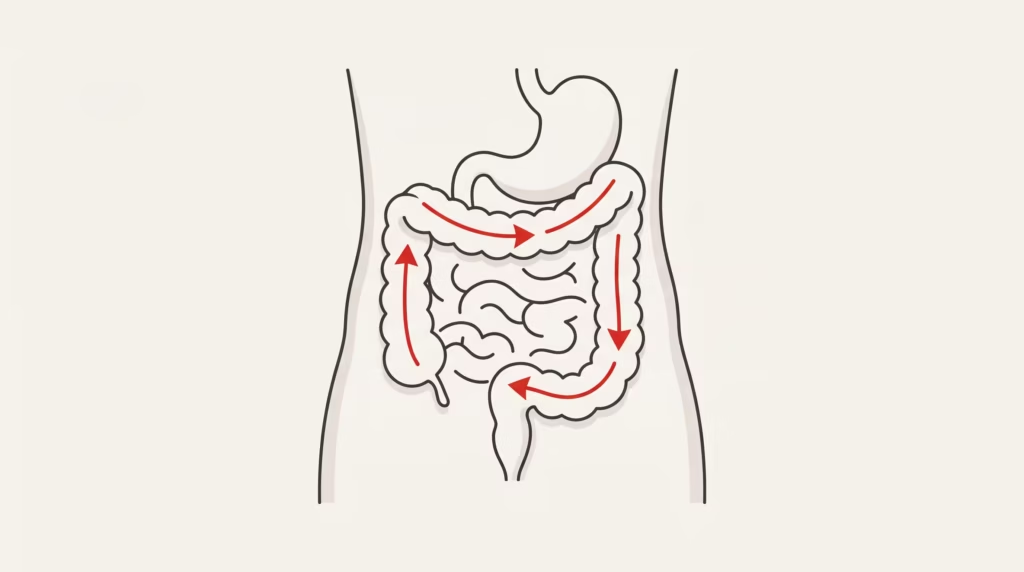
Most cases are functional constipation (with no disease behind it) and are explained by lifestyle:
- Little fibre in the diet.
- Poor hydration (without water, the colon dries out the stools).
- A sedentary lifestyle (movement stimulates the gut).
- Ignoring the urge as a habit.
- Changes in routine and travel.
Other times it’s secondary: certain medications (opioids, iron, some antidepressants), pregnancy, age or conditions such as hypothyroidism, diabetes or irritable bowel syndrome.
First line: habits with evidence (before laxatives)
The clinical guidelines agree: the first thing isn’t pills, but these changes, which are safe and go to the root of the problem.
- More fibre, little by little (target, 25–31 g/day): fruit – kiwi and prunes work especially well –, vegetables, pulses, wholegrains. Increase it slowly to avoid gas.
- Drink enough (1.5–2 litres): raising your fibre without water can make it worse.
- Move: aerobic exercise stimulates the colon.
- Build a habit: go to the toilet at the same time, ideally 15–45 min after breakfast (make the most of the natural reflex after eating), and don’t hold it in when the urge comes.
- Posture on the toilet: a small stool that raises your feet mimics the squatting position and makes passing stools much easier.
Did you know …? A trick as simple as resting your feet on a stool when you go to the toilet has a physiological basis: it relaxes the muscle that “closes” the rectum and makes emptying easier. Cheap, with no side effects and surprisingly effective.
Abdominal massage and visceral osteopathy: let’s be honest
Many people look for manual therapies for this, so we need to be clear about what the evidence says, without selling smoke:
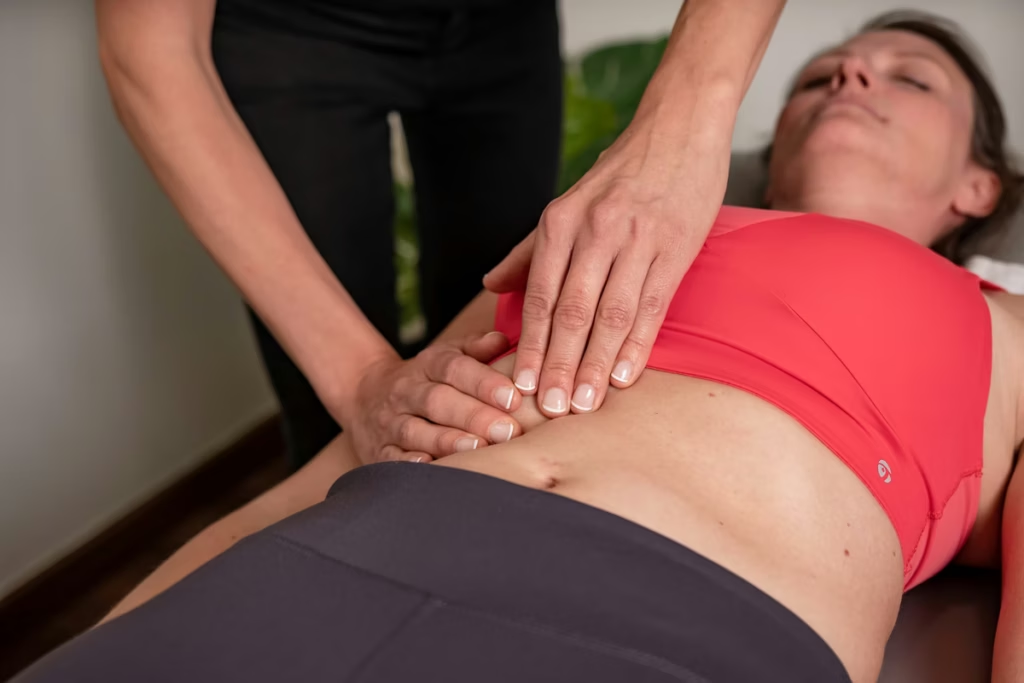
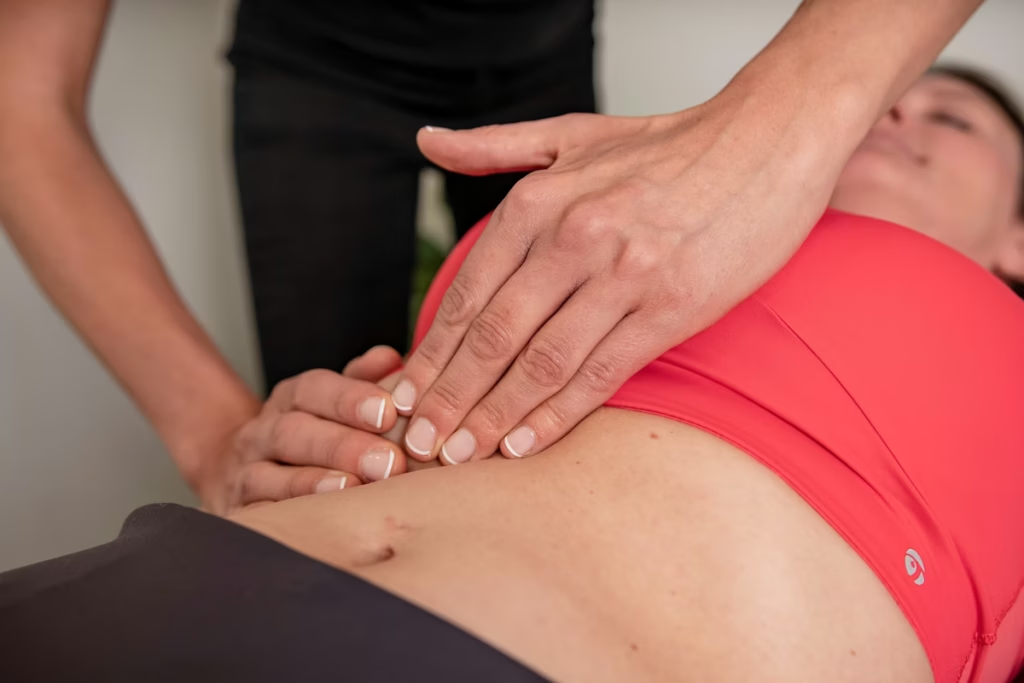
- Abdominal massage: has good-quality evidence. Systematic reviews conclude that it can increase the frequency of bowel movements, soften the stools and improve quality of life in chronic constipation. What’s more, it’s a technique you can learn and apply to yourself.
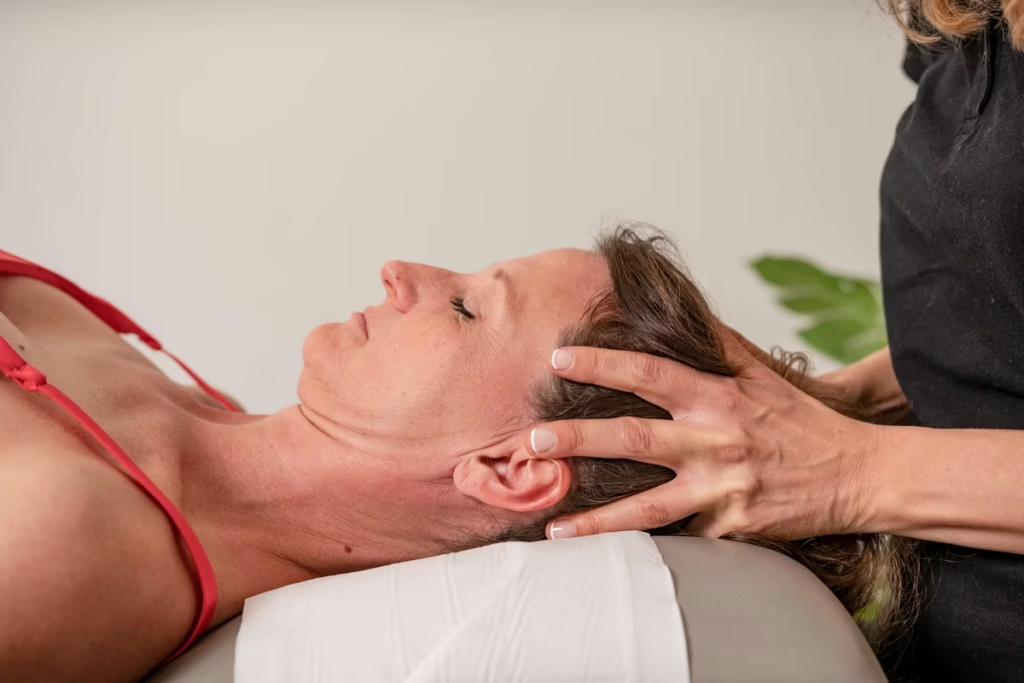
- Visceral osteopathy: is promising but with limited, low-quality evidence. Some small studies suggest improvement, but more solid research is needed to confirm it.
Honest conclusion: abdominal massage is a good supporting tool; visceral osteopathy may help some people, but it isn’t backed with the same strength. And neither replaces medical assessment, especially if there are warning signs.
Quick summary – what each one does
| Measure | Backing |
|---|---|
| Fibre, water, activity, routine | First line, good evidence |
| Stool (posture) | Simple and effective |
| Abdominal massage | Quality evidence as support |
| Visceral osteopathy | Promising, limited evidence |
| Laxatives | Under supervision, not routinely |
Laxatives: when and which
If habits aren’t enough, the doctor may recommend laxatives in the short term. Bulk-forming ones (such as psyllium) and osmotic ones (polyethylene glycol, lactulose) are the first choice and the safest for somewhat longer use. Stimulant ones (senna, bisacodyl) are powerful but not for regular use, because the gut can “get used” to them. That’s why they should be used with judgement and supervision.
Warning signs: here you mustn’t wait
Most of the time constipation is trivial. But certain signs make it essential to rule out something serious (including colorectal cancer):
⚠️ See a doctor without delay if there is:
- Blood in the stools, or black, tarry stools.
- Weight loss with no explanation.
- A recent and persistent change in bowel habit, especially from the age of 50.
- Anaemia from iron deficiency.
- Severe abdominal pain, vomiting or being unable to pass wind.
- A family history of bowel cancer.
When to see someone?
Book an appointment if the constipation is severe or doesn’t improve after several weeks of good habits; if you often need laxatives to be able to go; or if it significantly affects your quality of life. And, of course, at any warning sign. Osteopathy and massage can support, but don’t replace medical assessment.
In short
Let’s go back to the subject nobody talks about. Now you have the map: constipation is tackled first with simple, well-tested things – more fibre and water, moving, a routine and even a stool – before laxatives. Abdominal massage is a good ally with scientific backing; visceral osteopathy, a promising but more modest option in terms of evidence. And, above all, there are warning signs that aren’t up for negotiation: faced with blood, weight loss or a recent change in habit from the age of 50, the doctor is the first stop.
Looking after your gut isn’t a matter of a miracle remedy, but of a few consistent habits – and of knowing when to ask for help.
Constipation that doesn’t improve with the usual? At Clínica QO (Alicante) we guide you with lifestyle advice and supporting techniques, and tell you clearly when medical assessment is advisable, in your language.
This content is informational and does not replace medical consultation. If you have warning signs, see your doctor.
Frequently asked questions
How often do you have to go to the toilet to not be constipated?
There’s no single “normal” number. We talk about constipation when there are fewer than three bowel movements a week along with straining, hard stools or a sense of not emptying. What matters is the set of symptoms, not just the frequency.
What is most effective against constipation?
Lifestyle measures: more fibre (gradually), good hydration, physical activity, a toilet routine and a suitable posture (stool). They’re the first line, before laxatives.
Does abdominal massage work?
Yes, it has quality evidence as support: it can increase the frequency of bowel movements and improve quality of life. What’s more, you can learn to apply it yourself.
And visceral osteopathy?
It’s promising, but its evidence is limited and of low quality. It may help some people as support, but it doesn’t replace lifestyle measures or medical assessment.
When should I worry about constipation?
If there’s blood in the stools, unexplained weight loss, a recent change in bowel habit (especially from the age of 50), anaemia, severe pain or vomiting. These are warning signs to see a doctor without delay.
Sources and reference guides
- NICE — Constipation (Clinical Knowledge Summaries): https://cks.nice.org.uk/topics/constipation/
- Criterios de Roma IV (trastornos funcionales gastrointestinales): https://theromefoundation.org/
- Cochrane / revisiones sistemáticas sobre masaje abdominal y estreñimiento, vía PubMed/NIH: https://pubmed.ncbi.nlm.nih.gov/
- World Gastroenterology Organisation — Constipation: https://www.worldgastroenterology.org/