

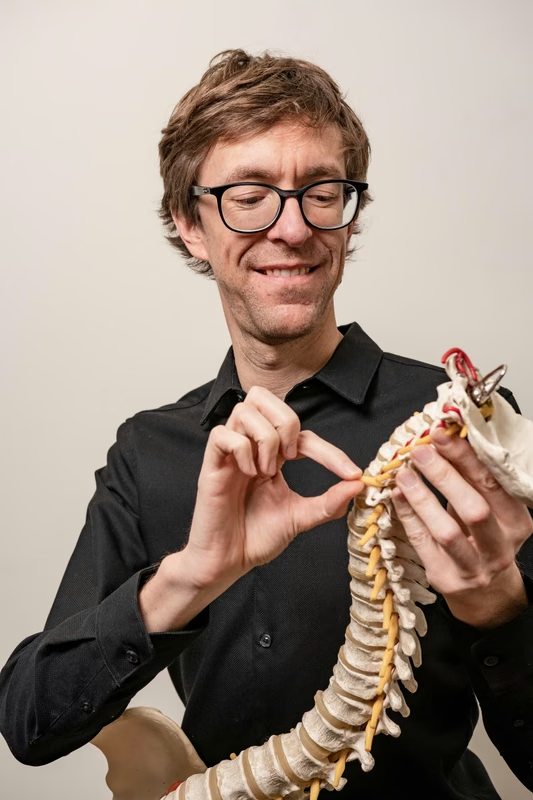
It gives no warning. It doesn’t hurt. It doesn’t show itself. Osteoporosis works silently for years, hollowing out the bones from the inside without you noticing a single thing – until one day, with a silly fall or a wrong move, a bone breaks. That’s why it’s called “the silent disease”. And that’s why understanding it in time, before the first fracture, changes everything.
An honest clarification from the outset: osteoporosis is a medical matter. Its diagnosis and the drugs are managed by your doctor. But there’s a huge part in which you – and a good exercise plan – make a real difference.
What is osteoporosis and why is it “silent”?
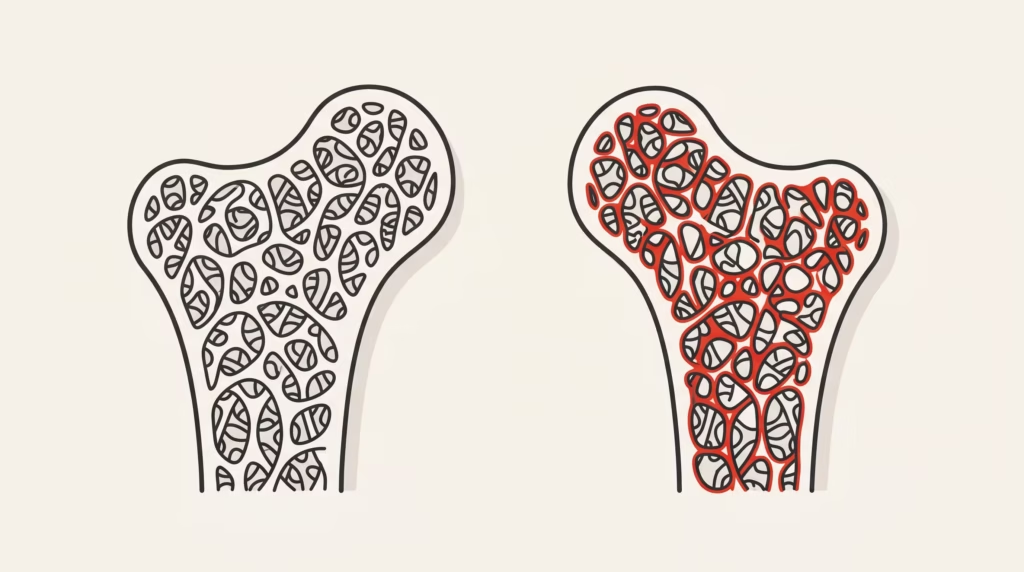
Your bones are alive: they renew themselves constantly, replacing old bone with new bone. Osteoporosis appears when that balance tips and more bone is lost than is formed. The result is more porous and fragile bones, with a greater risk of breaking.
It’s “silent” because that loss produces no symptoms. Many people discover they have it on the day they suffer a fracture from a minor knock that, with healthy bones, wouldn’t have amounted to more than a scare.
Who is most at risk?
Some factors can’t be changed; others can:
| Non-modifiable | Modifiable / medical |
|---|---|
| Being a woman (especially after the menopause) | Calcium and vitamin D deficiency |
| Advanced age | A sedentary lifestyle |
| Family history (hip fracture) | Tobacco and excess alcohol |
| A slim build | Prolonged use of corticosteroids |
Added to this are certain conditions (coeliac disease, kidney or liver problems, rheumatoid arthritis …) that also increase the risk.
Did you know …? The drop in oestrogen after the menopause speeds up bone loss. That’s why osteoporosis is far more common in women, and why the menopause is a good moment to review bone health – before the first fracture, not after.
The consequence that matters: fragility fractures
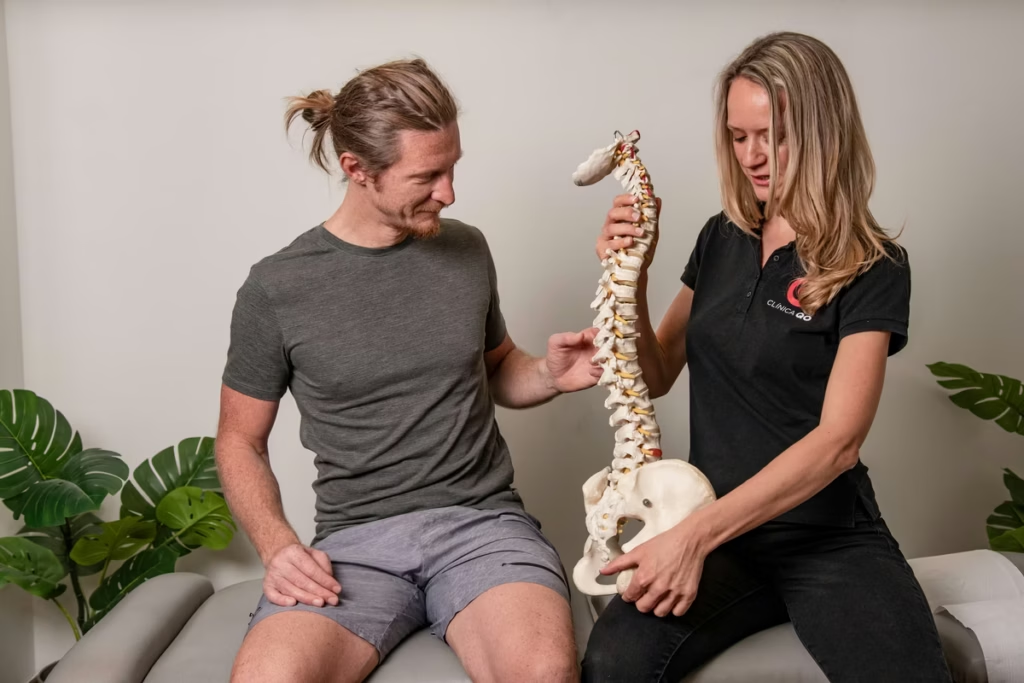
The whole problem of osteoporosis boils down to one word: fractures. So-called fragility fractures happen with minimal trauma – a fall from your own height – and concentrate in the hip, wrist and vertebrae.
Vertebral ones are especially treacherous: sometimes they occur without a clear blow and show up as sudden back pain, loss of height or that stooped posture (“hump”). Hip ones are the most serious, usually require surgery and can cost you your independence. That’s why the goal of all treatment is, at heart, to stop you breaking.
How is it diagnosed?
The reference test is bone densitometry (DEXA): it measures the bone mineral density at the hip and spine. It’s painless and with very little radiation. The result is given as a T-score; a value of −2.5 or lower indicates osteoporosis. In addition, tools like FRAX estimate your 10-year fracture risk by combining several factors. The person who decides and interprets all this is the doctor.
Treatment: medicine, calcium, vitamin D … and exercise
There’s no miracle “cure”, but osteoporosis is managed very well to prevent fractures. The plan has several strands:
- Adequate calcium and vitamin D, through diet and, if needed, supplements (vitamin D is key to absorbing calcium).
- Exercise, one of the pillars: the combination of weight-bearing exercise (walking, climbing stairs) and strength/resistance work (weights, bands) stimulates the bone and strengthens the muscle.
- Lifestyle: quitting smoking and moderating alcohol.
- Drugs when the risk is high: bisphosphonates, denosumab and others. The doctor prescribes and monitors them, choosing the right one and the duration.
Preventing falls: the other half of the battle
Since most fractures come from falls, preventing them is as important as caring for the bone. What works: strength and balance exercise; reviewing medication that may cause dizziness or drowsiness; looking after your eyesight; and a safe environment at home (out with loose rugs, good lighting, grab rails in the bathroom, non-slip footwear).
The role – and the limits – of physiotherapy
This is where a good exercise plan adds a great deal: physiotherapy helps with strength, balance, posture and pain (for example, after a vertebral fracture). But we have to be honest and prudent:
⚠️ Precautions in osteoporosis, especially if it’s severe:
- Avoid high-impact exercises (jumping) and abrupt flexion or twisting movements of the spine.
- Avoid high-velocity spinal manipulations, because of the fracture risk.
- Every programme must be supervised by a qualified professional.
And, above all: manual therapy or exercise don’t “cure” osteoporosis. They are an – important – part of a plan led by the medical team.
Warning signs and when to see a doctor
⚠️ See a doctor if:
- You’ve broken a bone from a minor knock or fall (fragility fracture).
- You have a sudden, intense back pain, especially if you’re older (possible vertebral fracture).
- You’ve lost height (more than 2–3 cm) or a “hump” is forming.
It’s also worth speaking to a doctor if you had an early menopause, have taken corticosteroids for months, one of your parents fractured a hip, or you’ve simply turned 50 and want to assess your risk.
In short
Let’s go back to that idea from the start: osteoporosis gives no warning. But that doesn’t mean you can’t do anything – quite the opposite. Between timely densitometry, calcium and vitamin D, a good plan of strength and balance exercise, a safe home and, when appropriate, the treatment the doctor prescribes, there’s an enormous margin to reach old age with strong bones and no fractures.
Bone responds to stimulus at any age. Standing up to osteoporosis isn’t about resigning yourself: it’s about moving, sensibly and well supported.
Want to look after your bones and prevent falls? At Clínica QO (Alicante) we design a safe strength and balance exercise programme, coordinated with your medical follow-up, in your language.
This content is informational and does not replace medical consultation. The diagnosis of osteoporosis and its drug treatment are the responsibility of medical staff.
Frequently asked questions
Is there a cure for osteoporosis?
There’s no cure as such, but it’s managed very well to prevent fractures with calcium and vitamin D, exercise, healthy habits and, when indicated, drugs prescribed by the doctor.
Why do they say it’s a “silent disease”?
Because the bone loss produces no symptoms. Many people don’t know they have it until they suffer a fracture from a minor knock or fall.
What exercise is good for osteoporosis?
The combination of weight-bearing exercise (walking, climbing stairs) and strength/resistance work (weights, bands), plus balance work to prevent falls. It should be supervised, avoiding high impact and abrupt spinal flexion in severe cases.
Is it safe to have my back manipulated if I have osteoporosis?
High-velocity spinal manipulations are not advised in osteoporosis because of the fracture risk. Physiotherapy must be adapted, prioritising strength, balance and posture in a safe way.
When should I have a bone densitometry?
It’s worth discussing with your doctor, especially if you’re a postmenopausal woman, have taken corticosteroids, have a family history of hip fracture or have turned 50. The doctor will assess your risk.
Sources and reference guides
- IOF — International Osteoporosis Foundation: https://www.osteoporosis.foundation/
- SEIOMM — Sociedad Española de Investigación Ósea y del Metabolismo Mineral: https://seiomm.org/
- NICE — Osteoporosis: assessing the risk of fragility fracture (CG146): https://www.nice.org.uk/guidance/cg146
- MedlinePlus (NIH) — Osteoporosis: https://medlineplus.gov/spanish/osteoporosis.html