

The knot in your neck at the end of the day. The clenched jaw you notice when you wake up. That back that seems to carry, quite literally, the weight of the week. You’re not imagining it, and it isn’t “bad luck”: it’s your body translating into physical pain a tension that began in your head. Stress doesn’t stay in the mind – it travels down into the muscles.
The good news is that this very bridge between mind and body can be crossed in the opposite direction too. Let’s see how.
How does stress turn into physical pain?
When your brain detects a threat – a real danger or a deadline – it activates an ancient mechanism: the “fight or flight” response. Adrenaline and cortisol are released, the heart speeds up and the muscles tense, ready to react. Useful if you have to flee from a lion. Not so useful if the “threat” is your inbox and it lasts for weeks.
That’s where the problem lies: when stress becomes chronic, the body stays on alert and maintains a sustained muscle contraction. This continuous tension reduces blood flow and oxygen to the muscle, and pain and stiffness appear. And if it persists, the nervous system can become hypersensitive: it amplifies pain signals, so the pain continues even after the initial stress has passed.
Did you know …? Chronic pain doesn’t always mean there’s tissue damage. Sometimes it’s the nervous system, “fine-tuned” by months of stress, still sounding the alarm even though there’s no longer any fire. Understanding this doesn’t make the pain any less real: it’s the basis for treating it properly.
The map of stress in the body
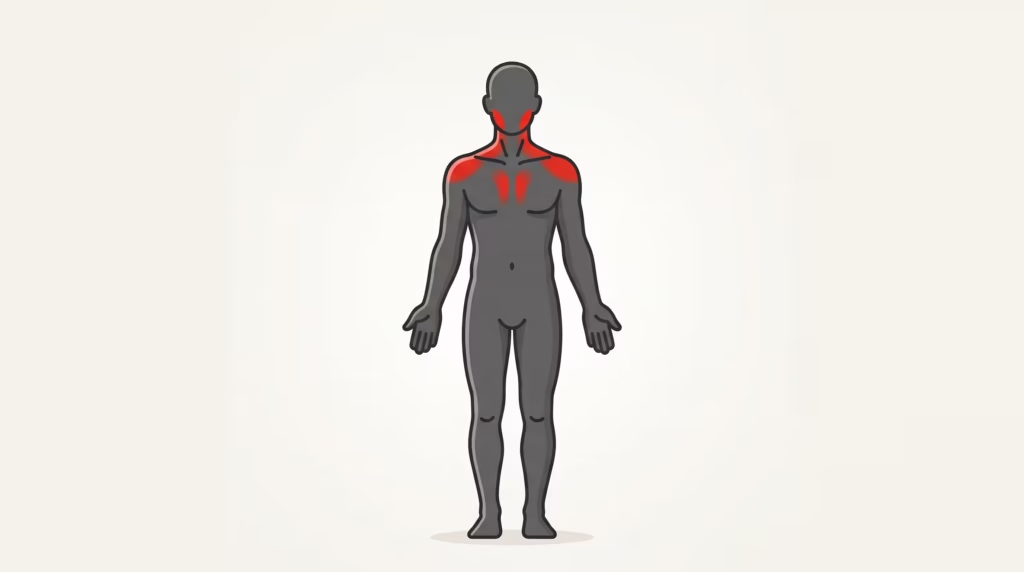
Stress-related tension has its favourite spots:
- Neck, trapezius and shoulders: the most common, especially combined with hours of screen time.
- Jaw: bruxism (clenching or grinding the teeth), typically at night.
- Back, lower and upper.
- Head: the tension headache, that band of pressure around the skull.
If you recognise yourself in several at once, it’s no coincidence: they share the same origin.
The vicious cycle (and how to break it)

Here’s the trap: the pain that the tension generates becomes, in turn, a new source of stress. More stress, more tension, more pain. And back to the start. Added to this is the fear of moving (“if it hurts, I’d better not push it”) which, far from helping, weakens and chronifies.
That’s why pain is understood today through the biopsychosocial model: it’s not just the physical, but also what you think and feel about that pain and the environment you live in. Breaking the cycle isn’t a matter of willpower, but of acting on several fronts at once.
Stress tension or an alarm signal?
The vast majority of these pains are benign. But there are signs that aren’t “from stress” and call for assessment:
⚠️ See a doctor if the muscle pain comes with:
- Loss of strength or weakness in an arm or leg.
- Weight loss with no explanation, fever or general malaise.
- Pain that doesn’t improve with rest and gets worse at night.
- Chest pain or pain in the left arm, with shortness of breath or sweating: it could be cardiac. Emergency.
That last point is important: faced with a crushing chest pain, don’t put it down to stress without ruling it out.
What really works
The key is to treat both ends of the problem: the symptom (the pain) and the cause (the stress).
- Physical exercise. It has the most evidence, both for pain and for stress. Walking, swimming, yoga or pilates release endorphins, lower cortisol and lift your mood. Exercise guided by a physiotherapist is especially safe and effective.
- Relaxation techniques. Diaphragmatic breathing, progressive muscle relaxation, meditation.
- Mindfulness. It reduces the perception of pain and the anxiety that goes with it.
- Cognitive behavioural therapy. It helps change the thoughts and behaviours that perpetuate the cycle.
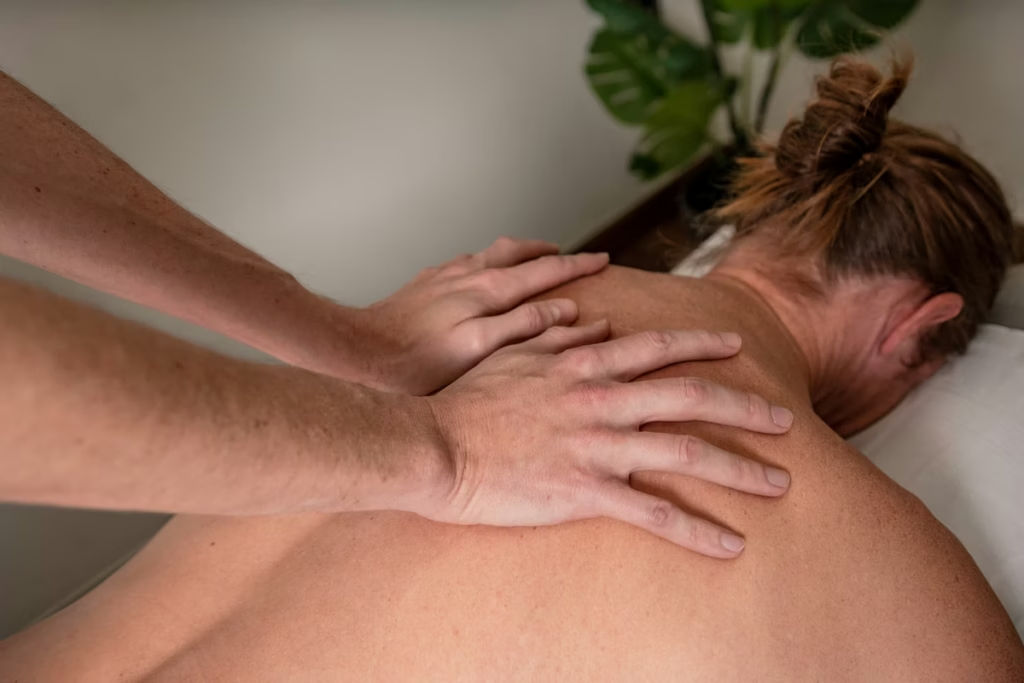
- Manual therapy and physiotherapy to relieve pain and stiffness symptomatically and get you moving again.
- Sleep hygiene, because stress, pain and poor sleep feed off each other.
Quick summary – what helps and what to avoid
| Helps | Better avoided |
|---|---|
| Regular, guided exercise | Prolonged rest |
| Relaxation, breathing, mindfulness | Purely passive treatments (heat, machines) as the only route |
| Treating the cause too (stress) | Tackling only the symptom with painkillers |
| Looked-after sleep | Staying still out of fear of pain |
When should you seek help?
Seek help if the pain is severe, doesn’t ease with self-care or limits your life; if any alarm signal appears; or if stress and anxiety feel unmanageable. The most effective approach is usually a team: your doctor to rule out other causes, a physiotherapist for the physical component and, when stress is the driver, psychological support. It’s no weakness to seek help on all three fronts: it’s the fastest way out.
In short
Let’s go back to that knot in your neck at the end of the day. Now you know it’s neither chance nor frailty: it’s the physical bill of a sustained tension, and it has both an explanation and a solution. The body does pay for the tension in the mind, yes – but it also responds when you look after both things at once.
Moving, learning to let go and not resigning yourself to “I just carry everything in my back” are, in themselves, part of the treatment.
Does stress build up in your body? At Clínica QO (Alicante) we help you relieve muscle tension and recover movement, with a plan that looks at both the pain and its origin, in your language.
Frequently asked questions
Can stress cause real muscle pain?
Yes, entirely real. Stress keeps the muscles in sustained tension, reduces their blood flow and causes pain and stiffness. Over time, the nervous system can become more sensitive and amplify that pain.
Where is stress tension felt most?
Mainly in the neck, trapezius and shoulders, in the jaw (bruxism), in the back and as tension headache. It’s common to feel it in several areas at once.
What works best for stress-related muscle tension?
Physical exercise is the best supported, alongside relaxation techniques, mindfulness and, if needed, psychological therapy. Physiotherapy helps relieve the symptom and get you moving again.
Is rest bad if I’m in pain from stress?
Prolonged rest is usually counterproductive: it weakens the muscle and feeds the pain–fear–tension cycle. Better to stay active within what you can tolerate.
When should I be concerned?
If there’s loss of strength, weight loss, fever, pain that doesn’t improve with rest, or chest/left-arm pain with shortness of breath (possible cardiac origin, an emergency). In those cases, see a doctor.
Sources and reference guides
- OMS — Estrés y salud mental: https://www.who.int/es/news-room/fact-sheets/detail/stress
- Cochrane Library — ejercicio y manejo del dolor crónico: https://www.cochranelibrary.com/
- MedlinePlus (NIH) — El estrés y su salud: https://medlineplus.gov/spanish/
- American Psychological Association — Stress effects on the body: https://www.apa.org/topics/stress