

“Sit up straight.” We’ve heard it a thousand times, and we almost always obey for ten seconds, until our backs slump again. We’re constantly worried about our posture: screen time, that curve that appears in the upper back, our heads leaning forward. But is posture really the main culprit behind our aches and pains, as we tend to believe? The evidence-based answer is more nuanced—and more liberating—than you might expect.
Does posture matter as much as we think it does?
For decades, we were told that “poor posture” was the cause of pain for half the world. Recent research has added quite a few nuances to that idea:
- There is no universal “perfect posture.” Every body is different, and forcing yourself into a rigid, supposedly “correct” position can cause more tension than a relaxed posture.
- The link between “poor posture” and pain is weaker than previously thought. Many people with “imperfect” posture don’t experience pain, and vice versa. Back pain depends on many factors: stress, sleep, physical activity, and mood.
- The best posture is usually “the next one.” The problem isn’t so much how you sit, but rather staying still for hours on end. Your body is meant to move.
Did you know that…? Studies of people without any pain show a wide range of postures: straight backs, hunched backs, heads jutting forward… The “textbook” posture doesn’t guarantee freedom from pain, and deviating from it doesn’t mean you’re doomed to have it. Moving and varying your posture is more important than “standing up straight.”
Postural “hump”: hyperkyphosis and forward head posture
🎬 Promotional video
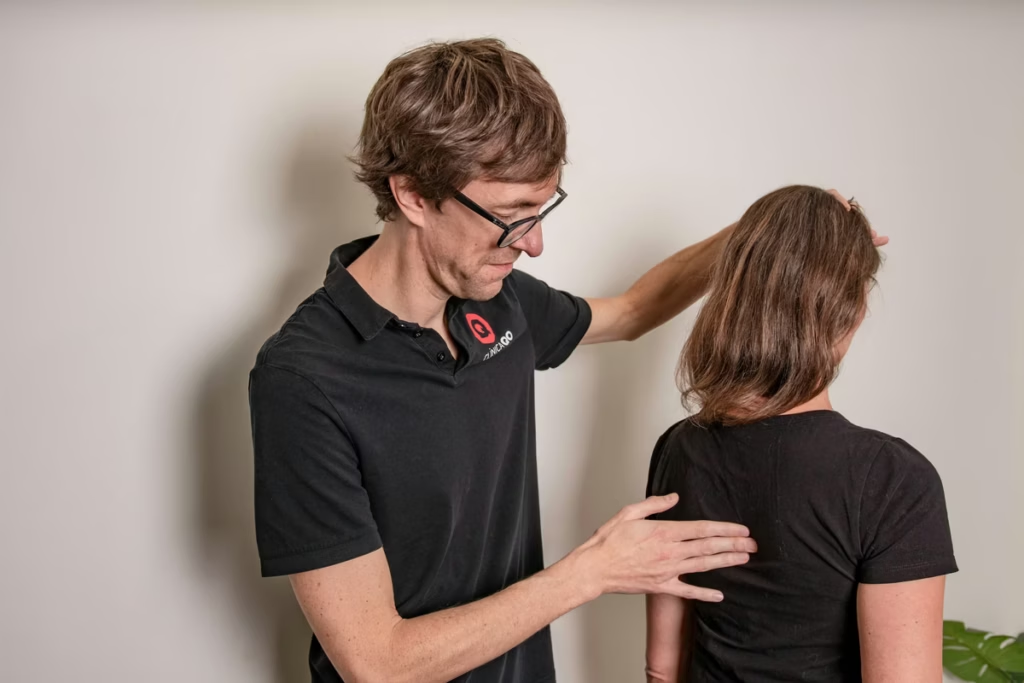
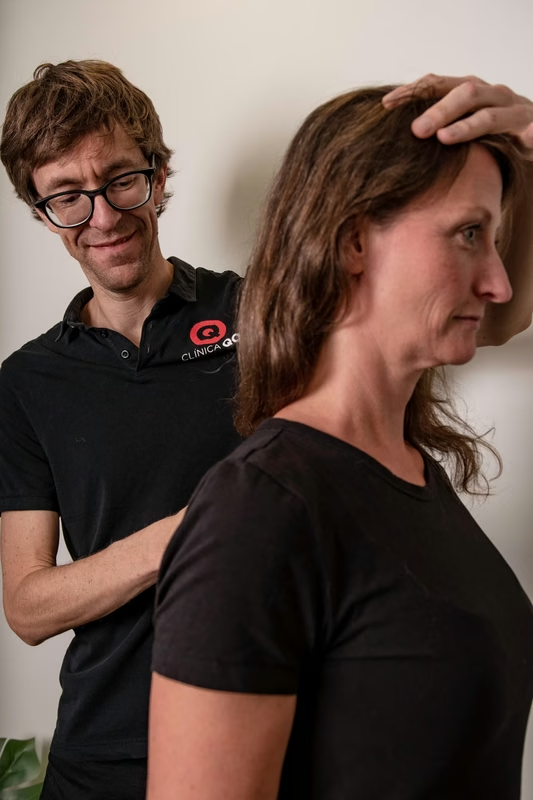
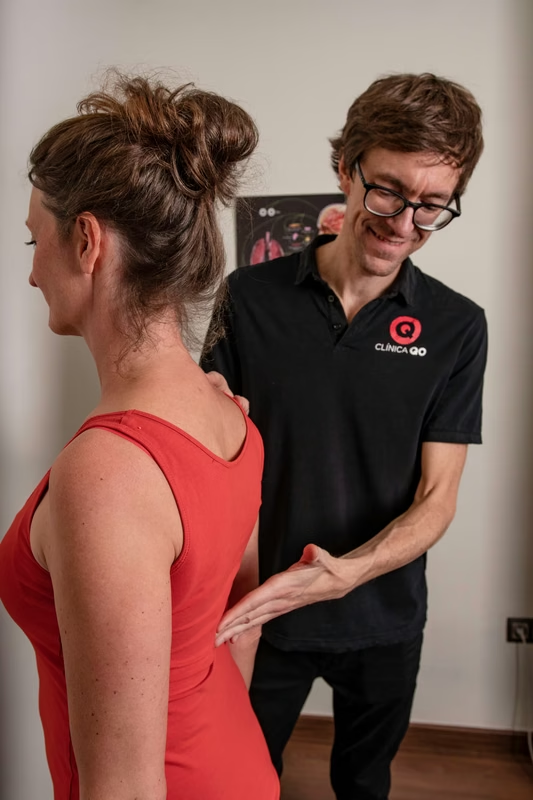
What we call a “hump” or hunched back is technically known as dorsal hyperkyphosis: an increase in the natural curve of the upper back. It’s often accompanied by forward head posture (the infamous “tech neck”), in which the head protrudes forward past the shoulders, putting extra strain on the neck.
This can contribute to discomfort and stiffness in the neck and upper back—not always, but in many cases. The good news: postural hyperkyphosis can be improved in most people.
⚠️ Important: Not every “hump” is caused by poor posture
Here’s an important distinction to be aware of for safety reasons. Postural hyperkyphosis is a condition involving curvature of the spine. But there’s something else entirely: the “buffalo hump” (dorsocervical giba)—a buildup of fat at the base of the neck that feels soft to the touch. This isn’t a posture issue: it can be a sign of a medical condition that requires evaluation, such as Cushing’s syndrome or the side effect of certain medications (corticosteroids, some treatments).
⚠️ See a doctor if:
- A soft lump of fat appears at the base of the neck, especially if it develops quickly.
- The curve is growing rapidly or is accompanied by significant pain, fatigue, or weakness.
- An older person experiences sudden back pain (possible vertebral fracture).
- There is tingling, numbness, or weakness in the arms or legs.
Why does a postural “hump” develop?
It is almost never due to a single cause, but rather to the accumulation of habits over time: a sedentary lifestyle and many hours spent hunched over screens; muscle weakness in the back and around the shoulder blades, along with tight chest muscles; age and, in older adults, osteoporosis with possible vertebral fractures that accentuate the curve. In adolescents, there is also a specific cause (Scheuermann’s disease).
How to Really Improve Your Posture (It’s Not Just About “Standing Up Straight”)
The key isn’t willpower to stay disciplined, but an active approach:
- Exercise and strength training—the strategy with the most evidence: strengthen the back and the muscles around the shoulder blades (with rows, for example), improve mobility in the thoracic spine, and work on the core.
- Move around and change positions: take active breaks, get up every so often, and stretch.
- Ergonomics: The screen is at eye level so you don’t have to tilt your head.
What about posture correctors and support belts? There is little long-term evidence supporting their use. They can serve as an occasional “reminder,” but when used continuously, the body gets used to the passive support and the muscles weaken even further. They are no substitute for exercise.
Quick Summary — What Helps and What to Avoid
| Yes, it helps | Best to avoid |
|---|---|
| Strengthen Your Back and Shoulder Blades | “Straightening up” by force |
| Change your posture and move around | To stay motionless for hours |
| Screen Ergonomics | Relying solely on girdles/shapewear |
| Consistency in Exercise | Obsessing over the “perfect” posture |
Forecast
The outlook for postural hyperkyphosis is optimistic. With a consistent exercise program and a more active lifestyle, most people see improvements in their strength, posture, discomfort, and the appearance of the “hump.” The key is consistency and focusing on movement and strength, not on pursuing an impossible static perfection.
In summary
Let’s go back to that “straight back” that never lasts. Now you know that the solution isn’t to tense up for ten seconds, but to move, vary your posture, and strengthen your core. Posture matters—but less than fear leads us to believe—and obsessing over the “perfect” posture is usually counterproductive. That said, if a “hump” suddenly appears or feels soft like fat, that’s not just poor posture—it warrants a visit to the doctor.
Your back doesn’t need you to watch over it like a drill sergeant. It needs you to move it and strengthen it.
Are you worried about your posture or that curve in your back? At Clínica QO (Alicante), we assess your case without causing undue alarm, rule out the serious issues, and provide you with an exercise plan designed to bring about real improvement—all in your language.
Frequently Asked Questions
Does poor posture really cause pain?
The connection is weaker than previously thought. Posture does play a role, but pain depends on many factors. Staying still for a long time has a greater impact than a specific posture; the best thing to do is to move around and vary your position.
How do you get rid of the “hump”?
If it is postural (hyperkyphosis), it improves with exercise: strengthening the back and shoulder blades, improving upper back and core mobility, and moving more. It cannot be corrected simply by “standing up straight” or by wearing a brace continuously.
Is a “buffalo hump” the same thing?
No. A buffalo hump is a buildup of fat at the base of the neck and may indicate a medical condition (such as Cushing’s syndrome or the side effects of certain medications). It’s best to consult a doctor.
Do posture correctors work?
There is little long-term evidence supporting their use. They may remind you to engage your muscles for a while, but when used continuously, they weaken your postural muscles. They are not a substitute for exercise.
When should I be concerned?
If a soft lump appears on the neck, the lump grows rapidly, there is significant pain or symptoms such as weakness or tingling, or an older person experiences sudden back pain (possible fracture), seek medical attention.
Sources and Reference Guides
- Reviews on Posture and Pain (Evidence-Based Physical Therapy), via PubMed/NIH: https://pubmed.ncbi.nlm.nih.gov/
- Mayo Clinic — Kyphosis: https://www.mayoclinic.org/diseases-conditions/kyphosis/symptoms-causes/syc-20374205
- Mayo Clinic — Buffalo hump / Cushing’s syndrome: https://www.mayoclinic.org/
- MedlinePlus (NIH) — Posture Problems: https://medlineplus.gov/spanish/