

You bend down to pick something up off the floor—a towel, a toy, nothing out of the ordinary—and as you stand back up, your lower back gives you a sharp twinge. Or maybe there wasn’t any heroic move involved: you’ve simply had a dull ache for weeks that just won’t go away. Welcome to one of the most crowded clubs on the planet. Up to 8 out of 10 people will experience lower back pain at some point in their lives.
And here’s the part that almost no one takes the time to explain to you calmly: in the vast majority of cases, that pain isn’t a sign of anything serious and goes away on its own. The problem is that fear, myths, and outdated advice often make things more complicated than the pain itself. Let’s set the record straight.
What is lower back pain, and why is it so common?
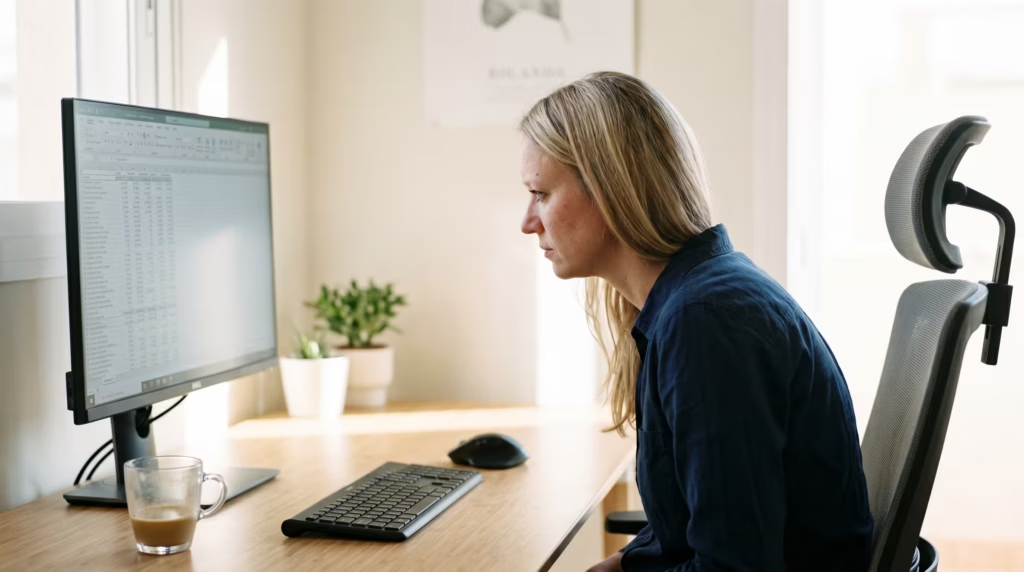
Low back pain is, simply put, pain located in the lower back, between the ribs and the buttocks. It is not a rare condition nor a sign that your body is “breaking down”: it is the most common musculoskeletal problem in the world and the leading cause of disability globally. In 2020, it affected 619 million people, and that number continues to rise as the population ages.
To put it another way: experiencing lower back pain at some point is almost as common as catching a cold. What makes the difference isn’t having it, but how you deal with it.
The key fact: 90% is “nonspecific” (and that’s good news)
🎬 Promotional video
Here is the most reassuring information, and it’s important to understand it well. Lower back pain is divided into two main groups:
- Specific low back pain (about 10–15%): The pain has a clear and identifiable structural cause—a fracture, an infection, a tumor, a herniated disc causing significant nerve compression, or an inflammatory condition.
- Nonspecific low back pain (about 90%): It cannot be attributed to a specific injury visible on imaging tests. And keep in mind: this does not mean the pain is “imaginary.” It means there is no serious underlying damage and that the prognosis is generally excellent.
Did you know…? The fact that your pain is “nonspecific” isn’t bad news or a diagnosis of “no specific cause.” It’s actually what’s most closely associated with a good recovery: without any serious damage to repair, your back has a clear path to getting better.

Why does it happen? Much more than “just a bad habit”
For years, lower back pain was explained in purely mechanical terms: you lifted a box the wrong way, and bam. Today we know that the reality is more complex and is better understood through the biopsychosocial model: pain is an experience influenced by several factors at once.
- Physical factors: muscle tension, age-related changes, weak core muscles (the muscles that support the trunk).
- Psychological factors: stress, anxiety, low mood, and—very importantly—the fear of moving amplify and prolong pain.
- Lifestyle factors: a sedentary lifestyle, being overweight, smoking, job dissatisfaction, and pessimistic expectations regarding recovery.
The good news is that many of these factors are within your control.
Three Myths It’s Time to Dispel
Lower back pain is surrounded by misconceptions that, far from helping, create fear and make things worse. Research has debunked the most widespread ones:
| Myth | What the Evidence Shows |
|---|---|
| “I need an MRI to find out what’s wrong with me.” | In cases of nonspecific low back pain, imaging is usually unnecessary and may even be counterproductive |
| “It’s best to stay in bed” | Prolonged rest slows recovery; moving around helps |
| “My back is ‘worn out’; I’ll be in pain forever.” | Wear and tear is as normal as gray hair; it doesn’t condemn anyone to chronic pain |
It’s worth emphasizing the first myth: finding “protrusions” or “degeneration” on an MRI is so common in people without pain that these findings rarely explain what’s wrong with you. They are, simply put, the wrinkles of the spine.
Symptoms and Stages: How Long Will It Last?
The main symptom is pain in the lower back, which can be dull or sharp and sometimes radiates to the buttock or thigh (if it extends beyond the knee, it could be sciatica, which is a different story). Depending on how long it lasts, it is classified as:
- Acute: less than 6 weeks.
- Subacute: between 6 and 12 weeks.
- Duration: more than 12 weeks.
The vast majority of acute episodes improve within the first few weeks. The fact that an episode persists does not mean it is serious; it means it requires a somewhat more comprehensive approach.
Warning Signs: When You Should Seek Medical Attention Right Away
Most cases of lower back pain are benign, but there are signs that require immediate medical attention:
⚠️ See a doctor right away (or go to the emergency room) if you experience:
- Loss of bladder or bowel control, or numbness in the genital area or “saddle area.”
- Significant or progressive weakness in the legs.
- History of cancer with pain that does not improve with rest.
- Fever, chills, or unexplained weight loss.
- Pain following a hard blow or a serious fall.
If none of these symptoms are present—which is usually the case—you are most likely dealing with lower back pain with a good prognosis.
What Really Works: Fewer Pills, More Exercise
The reference guidelines (NICE NG59 and the influential series in *The Lancet* on low back pain) have taken a clear new direction: first, non-pharmacological approaches.
- Understand and calm down. Knowing that pain does not necessarily mean there is damage and that the prognosis is good is, in itself, part of the treatment.
- Stay active. Continue with your activities by adapting them, rather than stopping altogether.
- Therapeutic exercise. This is the intervention with the most evidence to support it: it combines some aerobic activity (walking, swimming), core strengthening, and mobility exercises.
- Manual therapy as a short-term adjunct to a plan that includes exercise and education.
- Dealing with stress and fears, especially if the pain becomes chronic.
What about medications? They should be used sparingly and with caution. Pain relievers should be taken at the lowest possible dose and for the shortest possible time. Opioids are not recommended for low back pain due to their risks and limited benefits. Routine imaging tests and bed rest should not be part of the treatment plan.
Quick Summary — What Helps and What to Avoid
| Yes, it helps | Best to avoid |
|---|---|
| Regular and progressive exercise | Bed rest |
| Return to normal activities soon | “Just in case” MRI scans |
| Managing Stress and Fear of Movement | Opioids for General Pain |
| Manual therapy + education | Searching for a structural cause at all costs |
The Role of Physical Therapy, Chiropractic, and Osteopathy
A good professional doesn’t just passively “treat your back.” They assess you holistically, explain what’s going on, help alleviate your fears, and design a personalized exercise program for you—in addition to providing manual therapy when it’s helpful. Cochrane reviews confirm that exercise guided by a professional reduces pain and disability. The key lies in active support, not just the treatment table itself.
At Clínica QO (Alicante), that’s exactly how we work: an honest assessment, manual therapy to provide relief, exercises to ensure lasting improvement, and education to help you regain confidence in your back. And for many of our international patients, there’s another significant benefit: we provide care in your own language.
Prevention and Prognosis: Movement Is Medicine
According to the best available evidence, the most effective way to prevent future episodes is not a back brace or a “miracle” mattress: it’s regular exercise. Strong, flexible muscles, consistent physical activity, a healthy weight, and not smoking are the best way to ensure a healthy back.
And the prognosis? Well, honestly, most acute episodes improve within a few weeks. Relapses are common, yes—but a new episode isn’t a failure: it’s an opportunity to apply what you’ve learned and recover sooner.
In summary
Let’s go back to the beginning—to that towel on the floor and the sharp pain in your back. Now you see it differently: that pain, in 9 out of 10 cases, isn’t a sign of anything serious and will resolve on its own. What most influences how the story ends isn’t the MRI or the painkiller, but what you do: move around, overcome your fear, and, if necessary, let someone who knows how to guide you accompany you.
Your back is much stronger and more resilient than your fear would have you believe. Treat it as an ally, not as something that’s about to break.
Have you been experiencing lower back pain for days? At Clínica QO (Alicante), we provide you with an honest assessment, explain what’s going on without causing alarm, and give you a clear plan to get moving again—in your own language.
Frequently Asked Questions
How long does lower back pain last?
Most acute episodes improve within a few weeks. If it lasts longer than 12 weeks, it is considered chronic, but even then, an active treatment approach usually yields good results.
Do I need to get an MRI?
In cases of nonspecific low back pain, usually not. Imaging is only recommended if there are warning signs, because “wear and tear” findings are also very common in people without pain.
Is it better to rest or to keep moving?
Stay active. Prolonged bed rest slows down recovery. It’s best to stay active and resume your activities as soon as possible, adjusting them to your tolerance.
Which treatment works best?
Therapeutic exercise is the intervention with the most evidence to support it, along with education and, if helpful, manual therapy. Medications take a back seat, and opioids are not recommended.
When should I be concerned?
If any warning signs appear: loss of bladder or bowel control, genital numbness, progressive weakness in the legs, fever, unexplained weight loss, or pain following a major injury.
How do I keep him from coming back?
Regular exercise (core strength and flexibility), consistent physical activity, maintaining a healthy weight, and avoiding tobacco. This is the prevention method with the strongest scientific backing.
Sources and Reference Guides
- NICE — Low Back Pain and Sciatica in People Over 16 (NG59): https://www.nice.org.uk/guidance/ng59
- The Lancet — Low Back Pain Series (2018): https://www.thelancet.com/series/low-back-pain
- Cochrane Library — reviews on exercise and manual therapy for low back pain: https://www.cochranelibrary.com/
- WHO — Low back pain (prevalence data): https://www.who.int/news-room/fact-sheets/detail/low-back-pain