

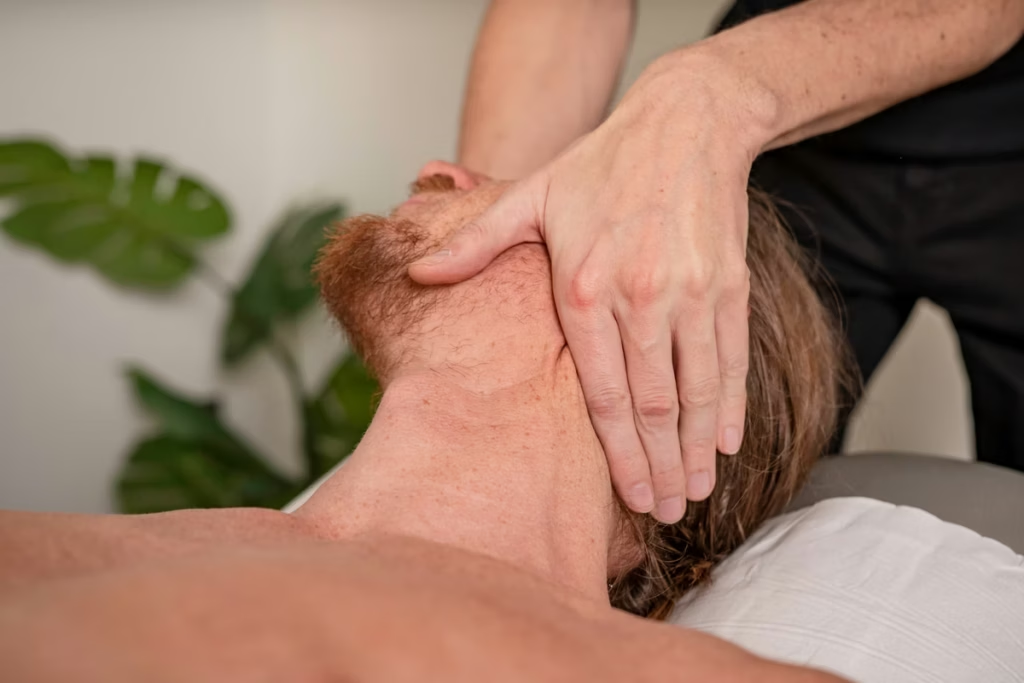
You raise your arm to take something from a shelf and there it is: a sharp pain in the shoulder that sometimes travels down the arm like a cramp. Or perhaps you made no odd movement and the pain appears anyway, with a tingling that reaches the fingers. Before thinking about treatments, there is a question that changes everything and that often goes unasked: does this pain start in the shoulder… or come from the neck?
Getting that answer right is half the solution. Let’s take a look.
Two very different origins
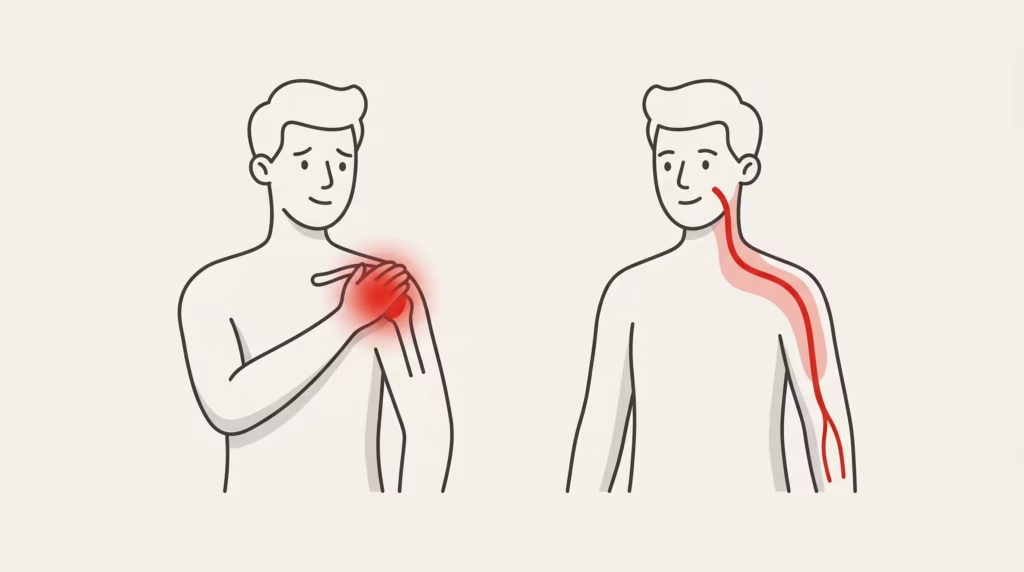
Not everything that hurts in the shoulder or arm originates there. There are two big families:
Pain from the shoulder itself. The problem is in the joint and its tendons. The most common:
- Rotator cuff tendinopathy and subacromial impingement (the most frequent cause): the tendons that stabilise the shoulder become irritated or get “pinched”.
- Adhesive capsulitis or frozen shoulder: pain that develops into very marked stiffness.
- Shoulder osteoarthritis: wear of the cartilage, with chronic pain and creaking.
Pain referred from the neck. The origin is in the cervical spine, but the pain is felt far away. The typical case is cervical radiculopathy: a nerve root in the neck is compressed (by a herniated disc or osteoarthritis) and the pain “travels” down the arm, often with tingling.
How to tell one from the other
These clues don’t replace an assessment, but they give a lot of guidance:
| Clue | Sounds like NECK (nerve) | Sounds like SHOULDER |
|---|---|---|
| What triggers it | Moving the neck (turning/tilting the head) | Moving the arm (raising it, combing your hair, putting it behind you) |
| Type of pain | Electric, burning; travels beyond the elbow to the hand | Dull or stabbing on the outer side of the shoulder; rarely passes the elbow |
| Tingling/weakness | Frequent, in the arm, hand or fingers | Uncommon |
| At rest | Can hurt even when seated; sometimes eases when you place your hand on your head | Usually improves at rest, but worsens when sleeping on that side |
Did you know…? If the pain travels from the elbow down to the hand and comes with tingling in the fingers, the “culprit” is most likely not the shoulder, but a nerve in the neck. That is why treating only the shoulder sometimes solves nothing: you’re looking in the wrong place.
Who does it happen to? Causes by age and activity
- Young people and athletes: overuse in overhead movements (swimming, tennis, volleyball), sometimes with instability.
- Adults aged 30 to 50: tendinitis and impingement, often from repeated movements at work (painting, building) or at home.
- Older people: osteoarthritis, cuff tears from wear and cervical radiculopathy from degenerative changes of the neck.
Warning signs: this goes to A&E
Most of these pains are benign, but there are exceptions that allow no delay:
⚠️ Go to A&E if you have:
- Pain in the left (or right) arm with tightness in the chest, shortness of breath, sweating, dizziness or nausea: it could be a heart attack.
- Severe or progressive weakness, or loss of sensation in the arm or hand.
- Deformity or total inability to move the arm after a blow or fall (possible fracture or dislocation).
- Pain with fever, redness and warmth in the joint (possible infection).
- The appearance of a lump or mass.
The first point is the most important: faced with arm pain and chest tightness, think of the heart before the shoulder.
Treatment: exercise first
Here is good news supported by the evidence: for the vast majority of these pains, conservative treatment is the first option and the most effective.
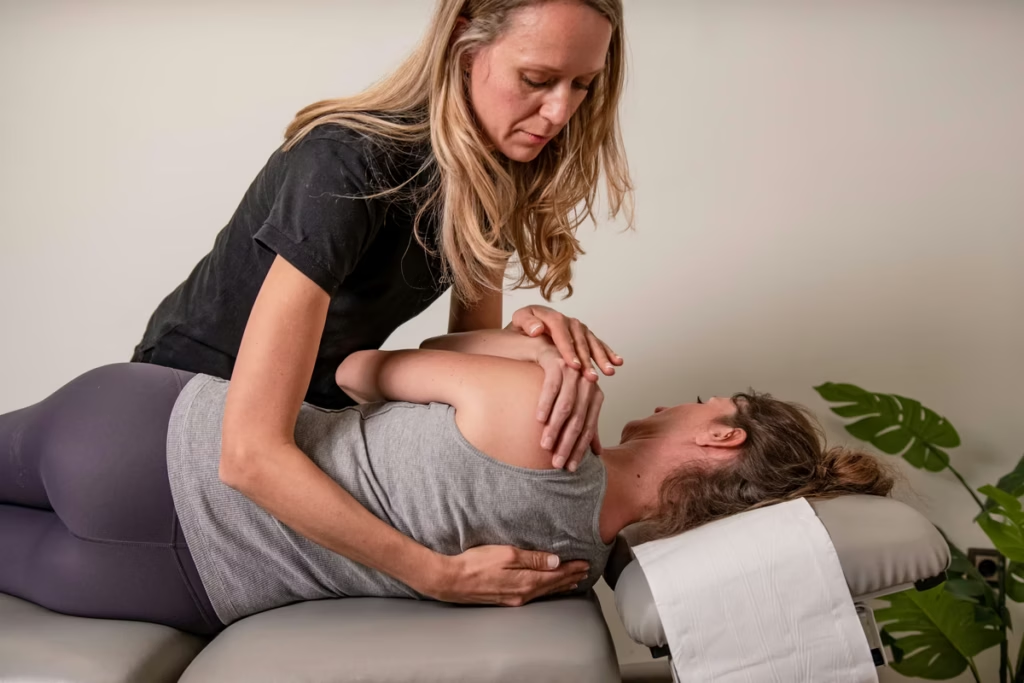
- Exercise and physiotherapy, first line. For the rotator cuff and impingement, a well-designed exercise programme is the cornerstone: it reduces pain, improves mobility and restores function. For cervical radiculopathy, staying active and physiotherapy are also key.
- Pain relief on occasion (anti-inflammatories) to control the pain in the short term.
- Injections: corticosteroid injections can relieve in the short to medium term and ease rehabilitation, but they do not cure the cause.
- Surgery: it is reserved for cases that do not improve after months of conservative treatment (3–6 months), complete tears in active people or severe and progressive nerve compressions.
A surprising fact worth knowing: high-quality Cochrane reviews have shown that subacromial decompression surgery for impingement is no better than exercise in the medium and long term. In other words, in many cases, working the shoulder well achieves the same as going through the operating theatre – without going through the operating theatre.
Prognosis
For most people, the outlook is favourable. Tendinopathy and impingement improve notably with exercise, in weeks or a few months. A frozen shoulder tends to resolve on its own, though with patience (it can take 1 to 3 years), and physiotherapy helps you cope better. Cervical radiculopathy usually improves with conservative treatment in weeks or months, with possible relapses that also respond well without surgery.
In summary
Let’s go back to that sharp pain when reaching the shelf, to the cramp that sometimes travels down the arm. Now you know the first question is not “what do I take?”, but “where does it come from?”. Telling whether the origin is in the shoulder or the neck is what avoids months of misdirected treatment – and, often, saves the operating theatre.
The shoulder and the neck are examined, told apart and treated. Almost always, with well-done exercise and patience, the pain eases.
Shoulder pain or pain that travels down the arm? At Clínica QO (Alicante) we locate the origin – shoulder or neck – rule out what matters and guide you with an exercise plan tailored to you, in your language.
Frequently asked questions
Does my arm pain come from the shoulder or the neck?
Clue: if it worsens when you move the neck and travels below the elbow with tingling in the hand, it usually comes from the neck (a nerve). If it worsens when you move the arm and stays in the shoulder without passing the elbow, it is usually from the shoulder itself. An assessment confirms it.
What is the most common cause of shoulder pain?
Rotator cuff tendinopathy and subacromial impingement syndrome, from irritation or wear of the tendons that stabilise the shoulder.
Do I need shoulder surgery?
In most cases, no. Exercise and physiotherapy are the first line, and for impingement surgery has not been shown to be better than exercise. Surgery is reserved for specific cases that do not improve.
When is arm pain urgent?
If it comes with chest tightness, shortness of breath or sweating (possible heart attack), if there is severe or progressive weakness, deformity after a blow, fever with a hot joint, or a lump appears. In those cases, A&E.
How long does it take to improve?
Most people improve with exercise in weeks or a few months. A frozen shoulder can take longer (1 to 3 years), but physiotherapy helps to control it and recover mobility.
Sources and reference guides
- Cochrane Library — Subacromial decompression surgery for shoulder pain: https://www.cochranelibrary.com/
- AAOS — Shoulder pain and rotator cuff problems: https://orthoinfo.aaos.org/
- JOSPT — guías de práctica clínica de hombro y radiculopatía cervical: https://www.jospt.org/
- MedlinePlus (NIH) — Dolor de hombro: https://medlineplus.gov/spanish/