

It’s not exactly that everything is spinning. It’s more of a strange feeling of instability, like walking on a mattress or on clouds—a dizziness that sets in when you move your neck and is almost always accompanied by stiffness and neck pain. Anyone who experiences it knows it’s real and bothersome. And yet, it’s one of the most debated topics in the doctor’s office.
Let’s explain this thoroughly and without causing alarm—but also with an important caveat up front, because caution is not optional here—.
What is cervical vertigo (and why does it spark so much debate)?
Cervical dizziness, or cervicogenic dizziness, is a sensation of imbalance and instability associated with neck dysfunction or pain. Note a key distinction: it’s not usually the typical rotational vertigo (that sensation of the room spinning), but rather lightheadedness, a feeling of unsteadiness when moving, or the sensation of “walking on soft ground.”
Its defining characteristic—and the reason for the debate—is that it is a diagnosis of exclusion. There is no test that definitively confirms it. It is reached only after ruling out, one by one, other causes of dizziness. In fact, its very existence—and the extent to which the neck is responsible—remains a subject of scientific debate. That is why, now more than ever, the order of the steps matters.
First of all: not all dizziness is caused by neck problems
🎬 Promotional video
This is the most important part of the article, so let’s take it slowly. There are much more common and better-defined causes of dizziness and vertigo that should be ruled out first:
| Reason | As is usually the case | Distinctive clue |
|---|---|---|
| VPPB (crystals) | Intense, very brief (seconds) rotational vertigo | It goes off when you turn over in bed or look up |
| Meniere’s Disease | Episodes ranging from 20 minutes to several hours | With hearing loss, tinnitus, and a feeling of fullness in the ear |
| Vestibular neuritis | Intense and constant vertigo, days | After a viral infection, with nausea |
BPPV (the so-called “little crystals” in the inner ear) is the most common cause of vertigo, and it has its own treatment. The difference from cervical vertigo is that, in the latter, the instability is associated with neck pain and worsens with neck movements, rather than with changes in the position of the head in space.
Practical conclusion: If you’re experiencing dizziness, the first step isn’t to “treat your neck,” but to undergo a thorough evaluation to rule out ear problems and other causes. Skipping this step is the most common mistake.
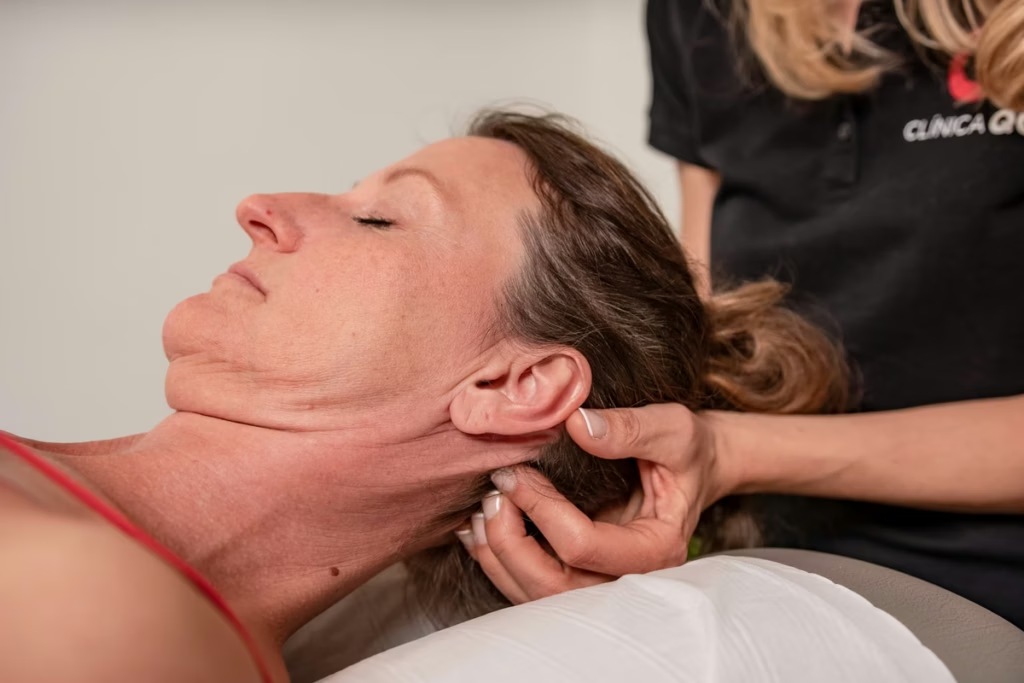
Why Can Your Neck Make You Feel Dizzy? The “Conflict of Signals”
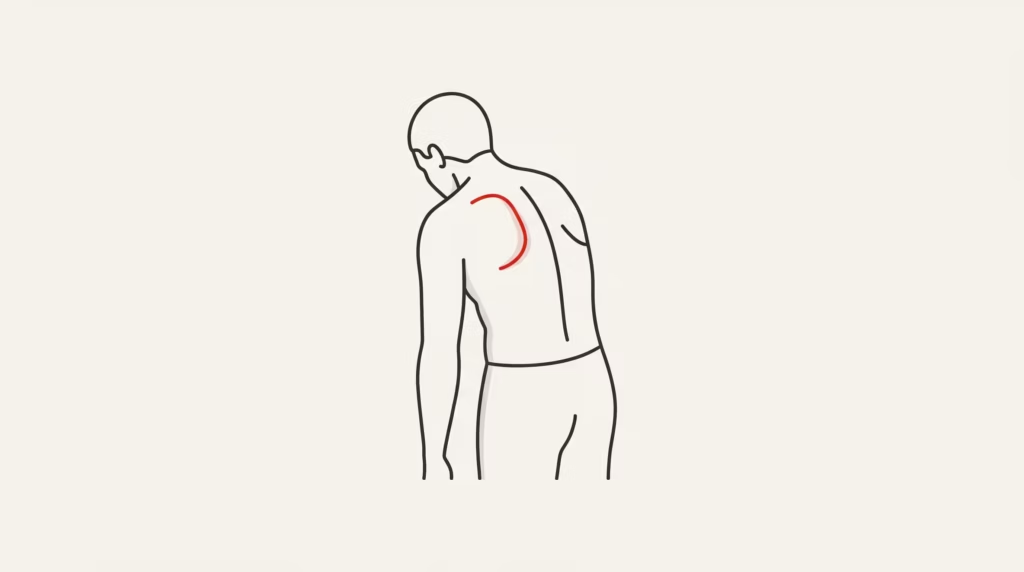
Your balance rests on three pillars: your sense of sight, your inner ear (vestibular system), and proprioception—those sensors in your muscles and joints that tell your brain where each part of your body is. Your neck, especially the upper part, is full of these sensors.
The theory is this: if the joints and muscles in the neck aren’t working properly or are painful, they send “distorted” information to the brain. That signal conflicts with the (correct) information coming from the eyes and ears. The brain receives conflicting versions of reality and, unable to reconcile them, generates that sensation of dizziness and unsteadiness.
Did you know…? The upper part of the neck is one of the areas with the most position receptors in the entire body. That’s why cervical tension or dysfunction can “fool” the balance system, even if your inner ear is perfectly healthy.
How it feels: more instability than turns

The symptoms of cervical vertigo have a fairly distinctive pattern:
- A feeling of unsteadiness or dizziness, rather than a sensation of spinning.
- It appears or worsens with neck pain and movement; its severity usually corresponds to that of the neck pain.
- Stiffness and neck pain are almost constant companions, sometimes accompanied by limited mobility.
- Often, a headache that starts at the back of the neck.
- Episodes of varying duration, ranging from minutes to hours.
Warning signs: This condition is NOT treated without first ruling it out
Here’s a serious warning. Before attributing anything to the neck, there are signs that warrant a medical evaluation to rule out potentially serious problems (such as a circulation problem in the neck arteries):
⚠️ Seek medical attention if dizziness is accompanied by:
- Double vision, difficulty speaking or swallowing.
- Sudden falls without losing consciousness.
- Numbness in the face or limbs, loss of strength, or lack of coordination.
- A sudden, very severe headache—”the worst of your life.”
- Fever, unexplained weight loss, or constant nighttime pain.
These symptoms (which professionals summarize as “the 5 Ds”: dizziness, diplopia, dysarthria, dysphagia, and drop attacks) are not something to be treated on an examination table; they must first be evaluated to rule out any serious conditions.
Treatment: physical therapy, once other causes have been ruled out
Once vestibular, neurological, and vascular causes have been ruled out and everything points to the neck, treatment focuses on that area. The evidence is still limited—let’s be honest—but promising, and it combines:
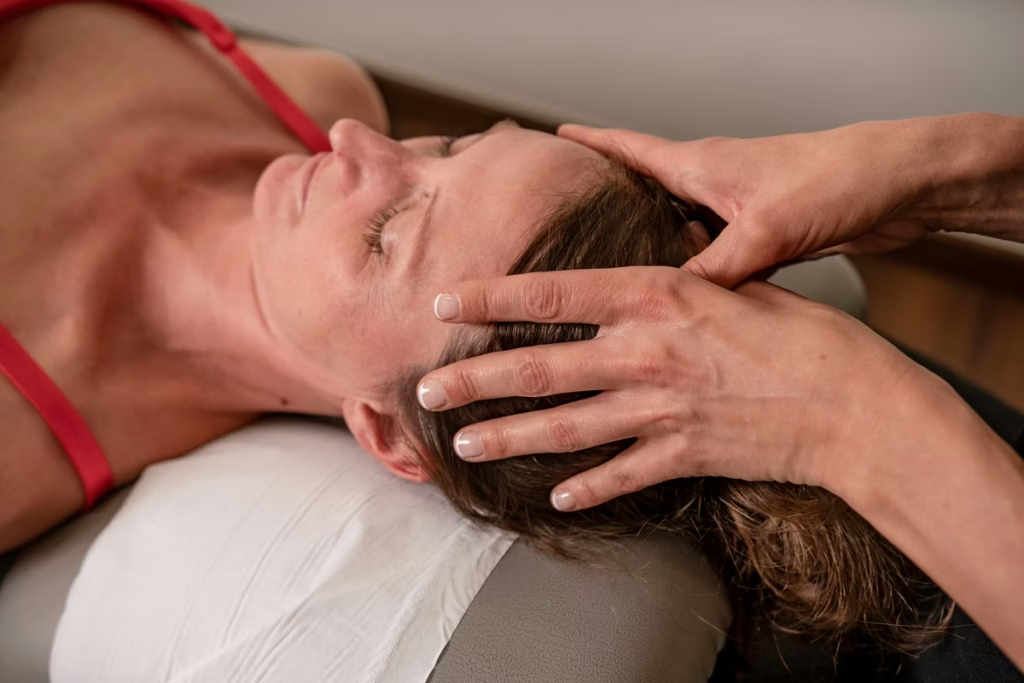
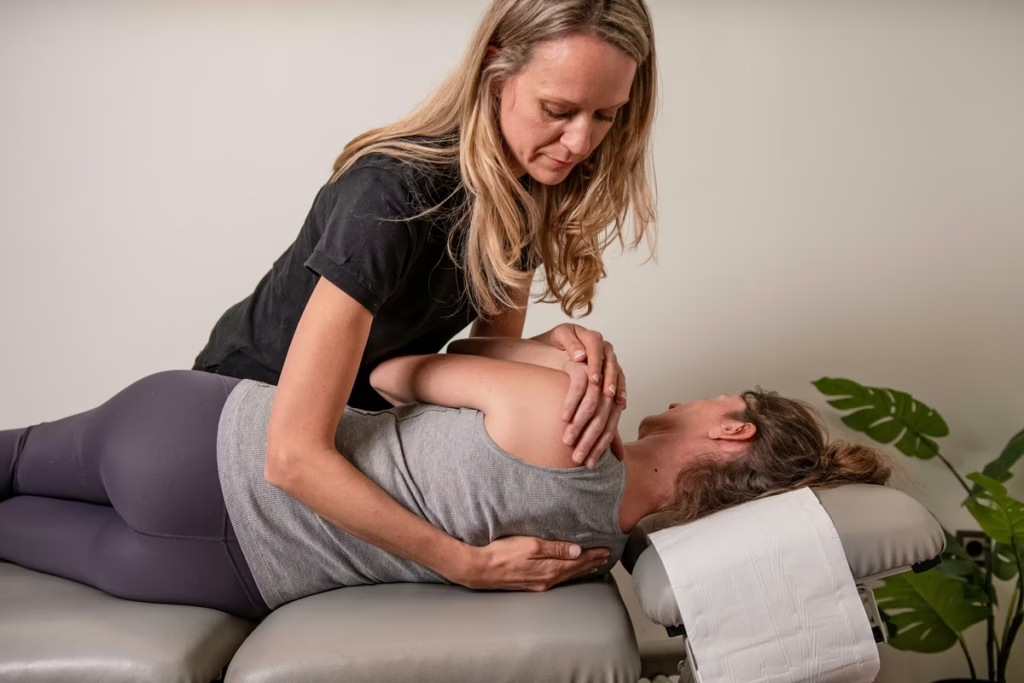
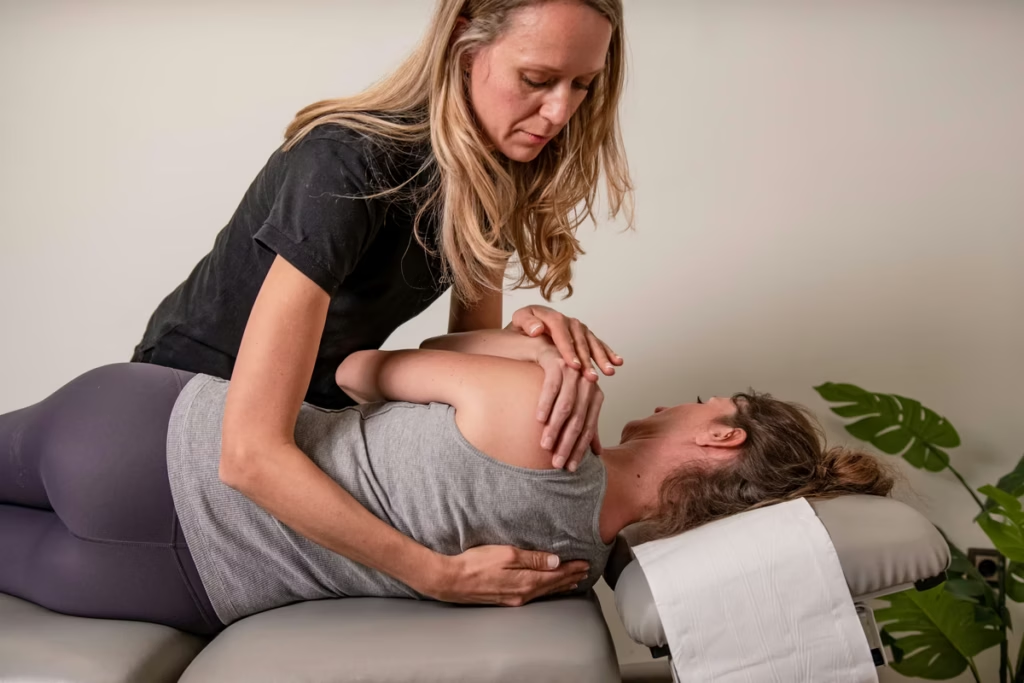
- Manual therapy for the cervical and thoracic spine to reduce pain and stiffness.
- Therapeutic exercise: neck motor control, proprioception, balance, and eye-head coordination. It is a central component, not a supplement.
- Education: Understanding what’s happening, overcoming the fear of movement, and maintaining good posture.
What isn’t honest is promising an immediate cure. Cervical vertigo can be a long-term condition, but with the right diagnosis and focused treatment, most people learn to manage it and improve their daily lives.
In summary
Let’s go back to that feeling of walking on clouds, to the unsteadiness that arises every time you turn your neck. Now you know two things. First, that neck issues can be behind dizziness, through that “conflict of signals” with your sense of balance. Second, and most importantly: cervical dizziness is the last thing to be confirmed, not the first thing to be assumed. First, you must rule out the ear and other causes, and be very alert to warning signs.
If your dizziness is always accompanied by a stiff, sore neck, and other causes have already been ruled out, there’s a lot you can do—starting with treating the source: your neck.
Are your dizziness and unsteadiness related to your neck? At Clínica QO (Alicante), we assess your condition, help you rule out the major causes, and, if the problem originates in the cervical spine, treat it with a personalized plan—in your language.
Frequently Asked Questions
What is cervical vertigo?
It is a sensation of instability or dizziness associated with neck dysfunction or pain. It is not usually rotational vertigo, but rather a feeling of unsteadiness that worsens with neck movements.
How do I know if my dizziness is coming from my neck or my ear?
It’s not easy to diagnose on your own: it’s a diagnosis of exclusion. That’s why the first step is an evaluation to rule out inner ear causes (such as BPPV) and other possibilities. In cervical vertigo, the instability is linked to neck pain and stiffness.
Is cervical vertigo dangerous?
Dizziness itself isn’t necessarily a cause for concern, but some cases of dizziness may be caused by conditions that do require medical attention. If you experience double vision, difficulty speaking or swallowing, sudden falls, loss of strength, or a sudden, severe headache, seek medical attention.
Is there a cure for cervical vertigo?
There is no immediate “cure,” but with the right diagnosis and physical therapy and exercise focused on the neck, most people get better and learn to manage their symptoms.
Which treatment works?
A combination of cervical manual therapy, exercise (motor control, proprioception, and balance), and education. The evidence is limited but suggests good outcomes once other causes have been ruled out.
Sources and Reference Guides
- Reiley AS et al. — How to diagnose cervicogenic dizziness (review), via PubMed/NIH: https://pubmed.ncbi.nlm.nih.gov/
- IFOMPT — International Framework for Red Flags / Cervical Arterial Dysfunction: https://www.ifompt.org/
- Academy of Neurologic Physical Therapy (APTA) — vestibular/cervicogenic dizziness: https://www.neuropt.org/
- MedlinePlus (NIH) — Dizziness and Vertigo: https://medlineplus.gov/spanish/